As mentioned in this series of articles, there are only six ways the fish in your pond can become ill. We've covered the first five: poor water quality, stress, contamination, prolonged poor nutrition, and damage. The final pathogen is "genetic."
As you undoubtedly know, our bodies are built and maintained by the genetic code: DNA. We inherit some of this from our mother, the rest from our father. This mix creates an infinite number of possibilities and makes us unique (unless we are part of an identical twin). This DNA is also copied during cell division to build our bodies and replace cells that need replacing. This works exactly the same way in fish and other organisms.
Now, it's possible that there's an error in the DNA code, which could cause the organism to develop a tumor later in life, for example, from which it ultimately dies. If the organism has already reproduced before then, there's a chance that this faulty coding has already been passed on to its offspring. This would constitute a hereditary defect that can lead to disease. In this case, unlike with the other five pathogens, there's little you can do as the fish's caregiver. You could call this bad luck.
However, it's also possible that the DNA becomes damaged after the fish hatches, leading to the production of "incorrect" copies that can lead to tumor formation, for example. This damage can occur during the replication process (bad luck), but also due to external influences such as UVC light, medication (toxin), copper-based algaecides, radiation, vitamin deficiencies, and the like. In these latter cases, we could have prevented disease by taking precautions.
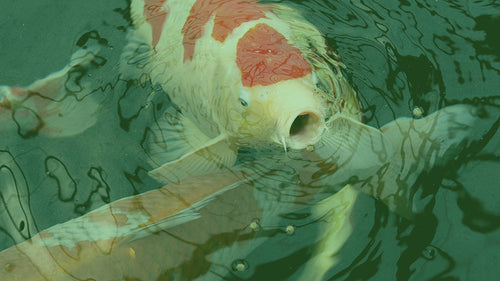
Hereditary diseases are much more common among ornamental fish than among wild fish. However, what breeders call "beautiful bloodlines" are often the result of inbreeding. Closely related fish (brothers and sisters or cousins) are crossed because they possess a specific desirable trait (for example, a very bright red color). Due to reduced genetic variation, a higher percentage of offspring with a hereditary defect are then produced. Breeders must therefore regularly introduce "fresh blood" to prevent this. However, they are reluctant to do so because it can also lead to the loss of the desired trait. Furthermore, with farmed fish, it's not the strongest fish that survives (allowed to develop into a marketable specimen), but the most beautiful. Natural selection is therefore no longer taking place (weak fish often don't survive in the wild), increasing the risk of genetically weak fish in your aquarium or pond.

Author: Joop van Tol (Koitoday)

Sign up for our newsletter
Receive the best offers and personal advice.
cookie preferences
To provide you with better, more personalized service, we use cookies and similar technologies. We and third parties use cookies to track your browsing behavior on our website. More information can be found on our privacy policy page.
 Nederlands
 Deutsch