Fungi are plant-based, multicellular organisms without chlorophyll (leaf green). Fungi cannot generate their own food through photosynthesis, as green plants can. Therefore, they are forced to obtain food through other means. This is done by extracting substances from other organisms, such as plants or animals.
Pathogenic fungi
A number of fungi can make humans and animals sick. Yet, we should also be able to muster some sympathy for certain fungi. Consider, for example, the fungus "penicilium," with which Alexander Fleming sparked a true medical revolution. Antibiotics were discovered, and penicillin saved many lives. In addition, there are, of course, edible fungi such as mushrooms and the mold in certain cheeses. This article focuses on Saprolegnia, a fungus that can appear externally on fish. There are several other fungal species that can make life difficult for fish, such as Branchiomyces, which can cause gill rot, or Dermocystidium, which appears as cysts and doesn't conform to our traditional image of fungi (threadlike, cottony). We may discuss these another time.
Saprolegnia
This fungus thrives between 3 and 33 degrees Celsius and can only establish itself in places where the fish's protective skin is damaged. It doesn't stand a chance on healthy skin. Saprolegnia has the undesirable property of keeping a wound open for extended periods. It uses enzymes to soften the wound tissue to promote nutrient absorption. After all, as long as a wound exists, the fungus has a right to exist. Saprolegnia is therefore a secondary condition, while the primary condition affects the wound on the fish.
Recognize
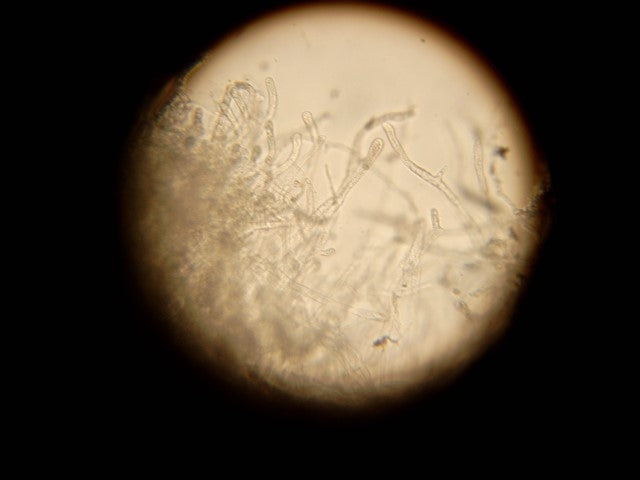
Saprolegnia can generally be identified visually. They are white, fluffy, cottony patches. However, confusion with vorticella, which can cause a similar appearance, sometimes occurs. Therefore, it's advisable to always check under a microscope to verify that it's actually a fungus and to look for the typical fungal threads. Use a magnification of 100x to 200x.
To deal with
Therefore, simply treating the fungus is of little use if the underlying cause isn't addressed simultaneously. Cleaning and sealing the wound prevents the fungus from reestablishing itself on the fish. An anti-fungal agent can also be used.
Author: Joop van Tol (www.koitoday.nl)

Sign up for our newsletter
Receive the best offers and personal advice.
cookie preferences
To provide you with better, more personalized service, we use cookies and similar technologies. We and third parties use cookies to track your browsing behavior on our website. More information can be found on our privacy policy page.
 Nederlands
 Deutsch


