The term Go Sanke is used in the koi hobby to refer to "the big three," namely Kohaku, Taisho Sanke, and Showa Sanshoku. In short, this refers to the three most important koi varieties: Kohaku, Sanke, and Showa.
Meaning
Go Sanke literally means "the three families" or "the three houses" and refers to the EDO period (1603-1867) in Japanese history. It was the era of the Shogun, a type of military leader with enormous traditions and prestige, who was ultimately sworn in by the emperor. After a civil war between various Shoguns, Tokugawa Leyasu came to power in 1603. Normally, the eldest son inherits this title. However, his three youngest sons, Yoshinao, Yorinobu, and Yorifusa, founded three "houses" from his clan: the Owari, Kii, and Mito houses, from which a new Shogun could be chosen in case of emergency. Go Sanke refers to these "three great houses" and therefore has nothing to do with the Sanke variety as such. San from Sanke is simply the Japanese term for three.
Usage
Go Sanke isn't just used to describe the three main koi varieties. It's a general term often used in Japan for the three most important characteristics, regardless of their field. A kind of top three, in other words.
Nishikigoi
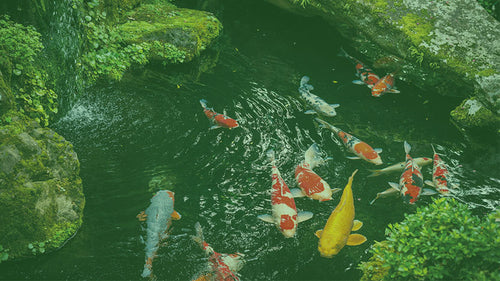
In the world of Nishikigoi, Go Sanke represents the three most important koi varieties. Ninety-nine out of every 100 Japanese koi shows produce Grand Champions (the highest ranking) from these three varieties. Very rarely, and usually at a smaller koi show, another variety (for example, Shiro Utsuri) will take top honors. At the world's most important koi show, the "Shinkokai All Japan Combined Nishikigoi Show," held annually in Tokyo, this has never happened before. The "All Japan" is considered the world championship. The winner is considered the best koi in the world.
Kohaku, Sanke and Showa
By far the most expertise and effort goes into perfecting these three varieties. Because of this, the rest of the nishikigoi range generally can't match the quality of the best Go Sanke from the best breeders. Therefore, the most stringent judging rules apply to Go Sanke. You really need a very good specimen to have a chance of winning one of the prizes awarded at a koi show in one of these categories. I've already described Kohaku in a previous article ( https://www.vijverleven.nl/kennisbank/koning-kohaku ). Sanke and Showa will follow later.


Author: Joop van Tol (Koitoday)

Sign up for our newsletter
Receive the best offers and personal advice.
cookie preferences
To provide you with better, more personalized service, we use cookies and similar technologies. We and third parties use cookies to track your browsing behavior on our website. More information can be found on our privacy policy page.
 Nederlands
 Deutsch


