Top 5 Winter Tips
It's important to prepare your pond for winter to ensure it's healthy going into and coming out of the winter. We'll give you our top 5 tips for the winter season!
Tip 1 Aquatic plants and leaves in the pond.
At the end of autumn, most aquatic plants will die. Water lilies, marsh plants, and oxygen plants often perish, but the roots often survive the winter. It's therefore important to prune them back well before the weather gets really cold. Cut these aquatic plants back properly with a pruning shears, for example. Pond shears . Leaves you don't cut off will end up in your pond, and too many leaves can rot and cause acidification. Besides leaves from aquatic plants, leaves from trees can also end up in your pond. It's also essential to remove these leaves from your pond. You can do this just like you do with the leaves you cut off aquatic plants. landing net remove from your pond.
Tip 2 Pond network
To prevent part of tip 1, you can install a pond net. This net prevents leaves and other unwanted debris from entering your pond. Besides catching leaves and other debris, it also makes it harder for herons and other animals to get to your fish.
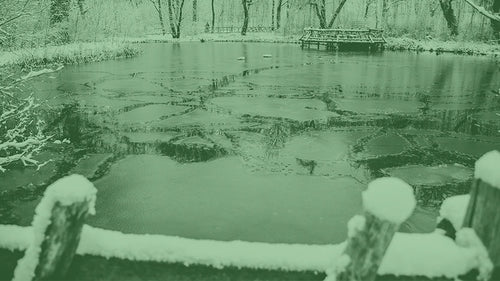
If it gets really cold, it's important to prevent your pond from freezing over. In a frozen pond, harmful substances like CO2 can't escape through the top, and they accumulate in the pond, potentially harming your plants and/or animals.
With the use of a heater ensure that you create a local hole through which harmful substances can leave your pond using a heating element.
A An air pump uses the bubbler stone to create movement in your water, thus creating a hole in the water. The hole has the same function: removing harmful substances from your pond.
WARNING! Do not chip the ice with an object. The impact can stress fish, and this must be avoided at all costs, especially during the winter season!
Tip 4 Water quality
On average, about half a meter of rainwater falls in your pond during the winter. This creates soft water and therefore fewer minerals in your pond. Your aquatic plants thrive much less in soft water, and you run the risk of them not thriving in the spring. This means less oxygen in your water, which can lead to algae growth. Therefore, it's important to ensure your pond water has the correct hardness before winter. You can achieve this by adding KH+ and GH+.
Tip 5 Filter and pump
It's often thought that you should turn off your filter and pump in the winter because your pond doesn't require much filtration. However, completely shutting down your filter system will cause the accumulated biologist to die off in the spring. As a result, you'll have to start all over again in the spring. This isn't good for your pond and its animals. Where possible, you can reduce the flow of your filter system by turning down your pump (adjustable pump) or turning it off with a tap.
Are you experiencing a temperature fluctuation, meaning it's getting colder outside quickly? Place your pump a little higher in the pond. This will ensure the temperature drops more gradually. This also makes it easier for your fish to adjust to the temperature.
If extreme frost occurs, you can protect your pipes and filter system. For example, by covering the pipes and filter with a layer of bubble wrap, which will prevent the plastic from touching the frost. And ensure there's always movement in your pipe water, because moving water doesn't freeze.
If you don't have those options and extreme frost does occur, err on the side of caution and clear out your filter system. Clean it thoroughly and store it in a warmer location. When you turn off your pump, place it in a bucket of water, for example, in a shed. You don't want mud or sand to dry inside your pump, as this can cause it to run rough in the spring. This can also cause chafing on your rotor or pump.

Sign up for our newsletter
Receive the best offers and personal advice.
cookie preferences
To provide you with better, more personalized service, we use cookies and similar technologies. We and third parties use cookies to track your browsing behavior on our website. More information can be found on our privacy policy page.
 Nederlands
 Deutsch


