In a previous article I discussed the nitrogen cycle Explained in its simplest form. The nitrogen cycle is the most important biological process that keeps a pond viable for its inhabitants. Because our ponds are often too small for the number of fish we keep, we need to give the nitrogen cycle, and therefore the nitrification process, a helping hand. In this article, we explain the nitrification process in more detail.

Nitrification is the biological oxidation of the nitrogen compound ammonia to the nitrogen compound nitrite, followed by the oxidation of this nitrite to the nitrogen compound nitrate. Oxidation means combustion. Certain bacteria are capable of this process. They "burn" ammonia and nitrite to provide their cells with energy. The byproduct is nitrate. These specific bacteria need a habitat to do their work; they prefer not to float freely in the water. In natural water, these bacteria are found on the bottom and walls of, for example, a ditch, but also on all other underwater surfaces they encounter (for example, an old bicycle in the canals of Amsterdam). However, this natural surface area is often limited. For this reason, the water feature in question can only support a limited number of fish. There is a biological balance. In our ponds, things are different. By definition, we keep far more fish than the natural nitrogen cycle can handle. To accommodate more bacteria, we therefore need much more surface area for the nitrification process to function fully. That's where the biological filter comes in.
Biological filter
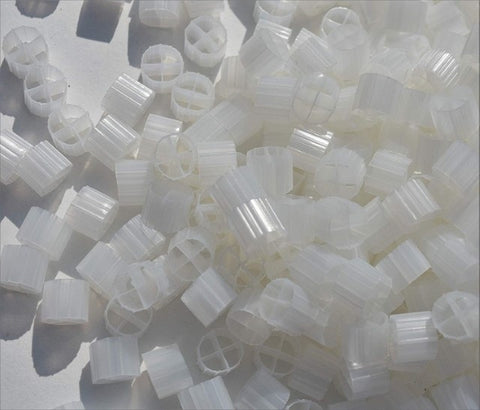
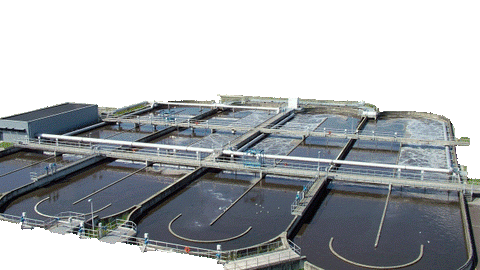
A filter installation A biological filter often consists of a mechanical and a biological component. The mechanical component aims to remove solid particles from the water. The purpose of a biological filter is simply to create a surface area for nitrifying bacteria to adhere to. Whether this is Japanese mats, moving bed material, or French fry forks from the local snack bar doesn't really matter, although materials specifically developed for this purpose are naturally much more efficient. By significantly increasing the surface area of our pond, it has become possible to provide a habitat for more nitrifying bacteria, allowing them to process more ammonia and thus keep more fish without poisoning them. Large amounts of oxygen are used for this oxidation to occur. The more fish you keep, the more aeration you will need. In addition, a lot of hydrogen (H+) is released in the process, which has an acidifying effect on the pond.
Refresh
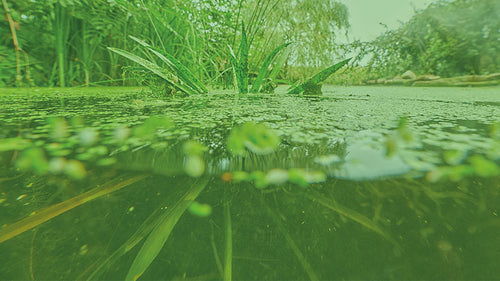
A consequence of the large amounts of ammonia and nitrite that need to be oxidized is the production of a large amount of nitrate. While nitrate isn't likely to pose a health risk to fish (the concentration would have to be very high), it can result in a tank full of pea soup. Aquatic plants, including algae (!), use nitrate as a nutrient. To keep nitrate levels under control, you'll need to change the water. The amount of water to change depends on the fish population and the amount of food you feed, but it's typically around 10 to 25 percent per week. This water change has another major advantage: it maintains the KH (calcium chloride) level ( Click here for more information about KH ).
Author: Joop van Tol (Koitoday)

Sign up for our newsletter
Receive the best offers and personal advice.
cookie preferences
To provide you with better, more personalized service, we use cookies and similar technologies. We and third parties use cookies to track your browsing behavior on our website. More information can be found on our privacy policy page.
 Nederlands
 Deutsch


