In a previous article ( click here ), we discussed how a fish can be injured. Depending on the circumstances and severity of the situation, you'll need to consider whether or not to treat the wound. You can wait and see, but if the wound spreads or becomes infected, you'll need to take action.
Goal
The goal of wound treatment is to prevent harmful organisms from exploiting the opportunity. We do this by disinfecting the wound. This involves removing any existing harmful organisms (such as bacteria, algae, fungi, and protozoa) and then sealing it, preventing new predators from entering. This allows the fish to recover more easily. After all, the body only needs to focus on tissue repair and no longer on simultaneously fighting against invaders.
Do it yourself?
You can perform wound treatment yourself. You can take a course or learn from an experienced hobbyist or veterinarian. It might be a bit daunting the first time, and it's best to do it with someone who has experience. Of course, you can also delegate the wound treatment to someone else. However, the advantage of being independent is that you don't have to wait for someone else to have time, while the problem worsens.
Material
Make sure you have all the necessary equipment ready when you anesthetize the fish. This prevents stress and hassle. You'll need:
There are ready-made sets for sale which includes all the necessary supplies.
Execution
Add the correct amount of anaesthetic fluid to a bowl of pond water.
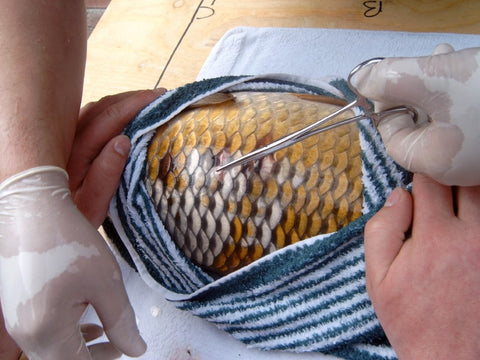
Work thoroughly and not like a gentle surgeon. You'll sometimes have to scrub vigorously and pull off scales to get a clean wound. Don't rush. The fish can easily be kept out of the water for about ten minutes, provided the gills remain wet.


Author: Joop van Tol (Koitoday)

Sign up for our newsletter
Receive the best offers and personal advice.
cookie preferences
To provide you with better, more personalized service, we use cookies and similar technologies. We and third parties use cookies to track your browsing behavior on our website. More information can be found on our privacy policy page.
 Nederlands
 Deutsch


